
7 Must-Know Commercial Laundry Essentials for Success
- Sarah Huber
- Dec 5, 2025
- 9 min read
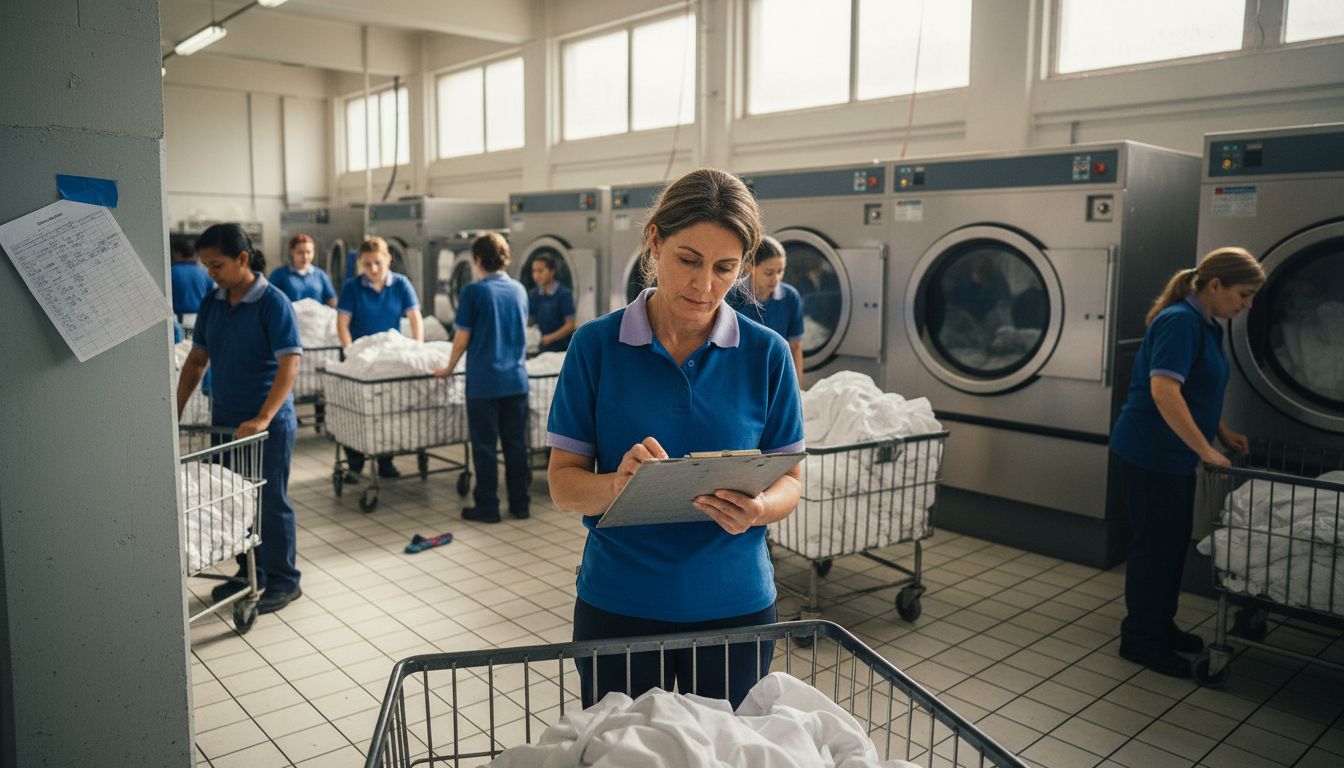
More than 80 percent of American businesses rely on commercial laundry services to keep their textiles in top condition. For companies big and small, clean linens and uniforms are vital for reputation and compliance. Choosing the right commercial laundry strategy can save money, preserve quality, and minimize headaches. This guide breaks down critical choices every American business faces, from equipment upgrades to specialty care, offering practical solutions for smooth and efficient operations.
Table of Contents
Quick Summary
Key Message | Explanation |
1. Evaluate specific laundry needs | Determine factors like volume, fabric type, and turnaround time for choosing a commercial laundry service. |
2. Choose detergents and softeners wisely | Match chemical selections to fabric types and soil levels to enhance cleaning effectiveness and preserve textiles. |
3. Implement efficient equipment strategies | Use advanced monitoring and maintenance techniques to optimize performance and reduce operational costs in laundry operations. |
4. Customize laundry schedules | Adapt schedules based on actual business needs and peak periods to improve efficiency and control costs. |
5. Track linen inventories systematically | Utilize digital systems for real-time tracking of linens to minimize loss and maintain service quality. |
1. Understanding Commercial Laundry Service Options
Commercial laundry services represent a sophisticated approach to handling large volume washing needs beyond traditional home laundering. Unlike residential setups, these professional services are engineered to process substantial quantities of textiles efficiently and consistently.
When businesses require laundry processing, they need more than just clean fabrics. Commercial laundry services offer specialized solutions that address unique industry requirements. From hospitality linens to medical uniforms, these services provide tailored cleaning approaches that residential machines simply cannot match.
The core difference lies in scale and technology. Commercial laundry facilities utilize industrial grade equipment capable of handling massive loads with advanced features. Compared to home washers that typically manage 12 to 15 pounds per cycle, commercial extractors can process up to 100 pounds simultaneously. This capacity translates to significant time and labor savings for businesses.
Key service options include:
Uniform Processing: Specialized cleaning for work attire
Hospitality Linens: Comprehensive cleaning for hotels and resorts
Medical Textile Care: Precise sanitization for healthcare environments
Event Services: Cleaning for large scale fabric needs like tablecloths and drapes
Business owners should evaluate their specific needs when selecting a commercial laundry service. Factors like volume, fabric types, required turnaround time, and specialized treatment needs will guide the most appropriate choice. The right service can significantly streamline operations and maintain professional standards.
2. Choosing the Right Laundry Detergents and Softeners
Selecting the perfect laundry detergents and softeners is more complex than simply grabbing the first product off the shelf. Commercial laundry services recognize that precise chemical selection can dramatically impact cleaning effectiveness and fabric longevity.
Detergent Composition Matters. Modern laundry detergents contain sophisticated combinations of surfactants, enzymes, and builders designed to tackle specific cleaning challenges. These ingredients work synergistically to break down dirt, remove stains, and maintain fabric integrity.
Fabric Compatibility is Key. Not all detergents perform equally across different textile types. Delicate fabrics require gentler formulations, while heavy duty work uniforms need robust cleaning agents that can eliminate tough industrial grime. Professional services understand that one size does not fit all when it comes to laundering.
Strategic Selection Considerations:
Fabric Type: Match detergent to material characteristics
Soil Level: Choose stronger formulations for heavily soiled items
Water Temperature: Select detergents optimized for specific washing temperatures
Environmental Impact: Consider concentrated and refillable options
When evaluating fabric softeners, businesses must consider more than just fragrance. Some materials like microfiber and performance athletic wear can be damaged by traditional softening agents. Thoughtful selection ensures both cleanliness and fabric preservation.
Professional laundry services invest significant time in understanding chemical interactions. Your commercial laundry strategy should do the same: prioritize quality detergents that clean effectively while protecting your valuable textiles.
3. Maximizing Laundry Equipment Efficiency
Commercial laundry operations demand sophisticated equipment strategies that go far beyond traditional washing approaches. Modern laundry technology has transformed equipment efficiency through intelligent design and advanced monitoring systems.
Equipment Optimization Starts with Smart Tracking. Commercial laundry machines are not just mechanical devices but complex systems requiring strategic management. By implementing Internet of Things (IoT) enabled monitoring, businesses can track real-time machine performance, predict maintenance needs, and minimize unexpected breakdowns.
Load Management is Critical. Commercial equipment differs significantly from residential machines in capacity and design. These industrial extractors can process substantially larger loads while consuming less water and energy per item. Understanding load optimization means balancing machine capacity, textile type, and cleaning requirements.
Key Efficiency Strategies:
Proactive Maintenance: Regular inspections and predictive monitoring
Load Balancing: Match machine capacity to textile volume
Technology Integration: Utilize IoT and smart monitoring systems
Energy Consumption Tracking: Monitor and reduce resource usage
Successful commercial laundry operations treat equipment as strategic assets. By investing in advanced tracking, maintenance, and optimization techniques, businesses can significantly reduce operational costs and improve overall service quality. The goal is not just cleaning textiles but doing so with maximum efficiency and minimal resource expenditure.
4. Customizing Laundry Schedules for Business Needs
Successful commercial laundry operations require more than just cleaning textiles they demand intelligent scheduling that adapts to unique business requirements. Businesses can now leverage flexible laundry service models that transform traditional one-size-fits-all approaches.
Scheduling Flexibility is a Strategic Advantage. Different industries have dramatically different laundry needs. A restaurant requires daily uniform cleaning, while a medical clinic might need specialized periodic processing for specialized textiles. Understanding and implementing customized scheduling can significantly reduce operational costs and improve efficiency.
Pricing Models Drive Scheduling Innovation. Modern commercial laundry services offer tiered and subscription based pricing that allows businesses to design laundry schedules matching their specific volume and frequency requirements. This approach enables precise budgeting and eliminates unnecessary service overhead.
Strategic Scheduling Considerations:
Volume Based Planning: Match laundry frequency to actual business needs
Predictive Forecasting: Anticipate peak laundry periods
Seasonal Adjustments: Modify schedules for changing business cycles
Cost Optimization: Select pricing models aligned with operational budgets
Successful businesses view laundry scheduling as a dynamic operational strategy. By understanding and leveraging flexible service models, companies can transform a routine expense into a strategic advantage. The key is finding a laundry partner who understands that your scheduling needs are as unique as your business itself.
5. Ensuring Proper Linen and Uniform Care
Maintaining the quality and appearance of linens and uniforms requires more than basic washing techniques. Hospitality and commercial industries demand precise textile care strategies that preserve fabric integrity and professional standards.
Fabric Care is a Precise Science. Different textiles require unique washing approaches. Understanding fabric composition, care labels, and appropriate cleaning agents can dramatically extend the life of your professional textiles while maintaining their aesthetic and functional qualities.
Strategic Textile Preservation Techniques:
Fabric Label Analysis: Decode manufacturer washing instructions
Detergent Selection: Match cleaning agents to specific textile types
Temperature Management: Use appropriate water temperatures
Softener Considerations: Choose softeners compatible with fabric materials
Professional linen and uniform care goes beyond simple cleaning. It involves understanding fabric molecular structures, chemical interactions, and preservation techniques. Businesses that invest time in developing comprehensive textile maintenance protocols can significantly reduce replacement costs and maintain a polished professional appearance.
Successful commercial laundry operations recognize that each textile tells a story. Proper care ensures that story continues smoothly, without premature wear or unexpected degradation. Your linens and uniforms are more than just fabric they are a direct reflection of your business standards and attention to detail.
6. Implementing Specialty and Medical Laundry Solutions
Specialty and medical laundry services demand exceptional precision and compliance with stringent hygiene standards. Commercial laundry facilities are uniquely equipped to handle complex textile processing requirements that go far beyond standard cleaning protocols.
Specialized Processing Requires Advanced Technology. Medical and specialty textiles involve intricate decontamination processes that residential or basic commercial laundry services cannot effectively manage. High capacity machines with precise temperature controls and specialized sanitization techniques are essential for maintaining patient safety and professional standards.
Critical Considerations for Specialty Laundry:
Pathogen Elimination: Implement comprehensive sanitization protocols
Fabric Compatibility: Understand unique textile composition requirements
Regulatory Compliance: Follow industry specific cleaning guidelines
Contamination Prevention: Utilize advanced separation and processing techniques
Successful specialty laundry operations recognize that each textile type requires a nuanced approach. Medical uniforms, surgical linens, and scientific laboratory textiles demand more than simple washing they require a sophisticated understanding of microbial control, fabric durability, and stringent quality assurance processes.
Businesses operating in healthcare, research, or specialized service industries must view their laundry operations as critical infrastructure. The right commercial laundry partner transforms textile care from a routine task into a strategic asset that supports operational excellence and professional reputation.
7. Tracking and Managing Damaged or Lost Linens
Managing textile inventories demands more than simple counting linens require strategic tracking systems that protect business investments. Commercial laundry services can implement sophisticated inventory management protocols to minimize financial losses and maintain operational efficiency.
Systematic Tracking Prevents Significant Losses. Businesses frequently underestimate the financial impact of lost or damaged linens. Implementing comprehensive tracking mechanisms allows organizations to monitor textile lifecycles, identify potential loss points, and develop proactive replacement strategies.
Strategic Linen Management Approaches:
Digital Inventory Systems: Utilize technology for real time tracking
Condition Assessment: Regular inspections and quality monitoring
Replacement Protocols: Establish clear guidelines for textile retirement
Cost Allocation: Implement precise reporting for damaged inventory
Successful linen management transforms what seems like a mundane operational task into a strategic financial control mechanism. By understanding the true value of each textile and developing robust tracking systems, businesses can significantly reduce unexpected expenses and maintain consistent service quality.
Professional organizations recognize that linens are not just fabric they are critical assets that directly impact customer experience and operational expenses. Intelligent tracking transforms textile management from a reactive process to a proactive business strategy.
Below is a comprehensive table summarizing strategies and considerations discussed throughout the article on commercial laundry services.
Category | Key Aspects | Considerations |
Service Options | Variety of tailored services including uniform processing, hospitality linens, and medical textiles. | Match service type to specific business needs for optimal performance. |
Detergent Selection | Importance of selecting appropriate detergents based on fabric type and soil level. | Consider environmental impact and fabric compatibility. |
Equipment Efficiency | Utilization of IoT for machine tracking and load management. | Regular maintenance and energy consumption tracking enhance efficiency. |
Custom Scheduling | Flexible schedules tailored to industry-specific needs. | Utilize tiered pricing models to match volume and budget. |
Linen & Uniform Care | Precise fabric care through proper detergent and temperature management. | Follow manufacturer instructions to preserve textile longevity. |
Specialty Laundry Solutions | Advanced sanitization for medical and specialty textiles. | Ensure compliance with hygiene standards and pathogen elimination. |
Inventory Management | Implement digital tracking to prevent losses. | Conduct regular inspections and establish replacement protocols. |
Streamline Your Business Laundry Needs with Expert Solutions
Managing commercial laundry requires addressing key challenges like specialized fabric care, scheduling flexibility, and maintaining textile integrity as highlighted in “7 Must-Know Commercial Laundry Essentials for Success.” From handling large uniform volumes to ensuring medical-grade sanitization and preventing linen loss, your business needs a partner that understands these critical factors and provides tailored, efficient solutions.
At GoGet My Laundry, we bring advanced commercial laundry technology and expert care directly to your door across Metro Phoenix. Benefit from flexible scheduling options, custom soap and softener selections, and powerful damaged linen tracking services designed for hospitality and medical industries. Our superior commercial extractor washers reduce wear on your textiles while speeding up turnaround times. Explore how our commercial services can transform your laundry operations with precision and reliability.
Looking for a laundry partner that aligns with your operational goals and elevates textile care standards? Experience hassle-free pickup and delivery seven days a week, including same-day service options. Visit GoGet My Laundry now and discover how to maximize efficiency and protect your valuable linens and uniforms. Don’t wait to upgrade your laundry solutions—your business deserves the best.
Explore Commercial Laundry Solutions Learn More About Textile Care Schedule Your Service Today
Frequently Asked Questions
What are the types of commercial laundry services available for businesses?
Commercial laundry services include uniform processing, hospitality linen cleaning, medical textile care, and event services. Identify your specific needs based on your industry to choose the best service for your operation.
How can I select the right laundry detergents for my commercial needs?
Choose detergents based on fabric type and soil level to ensure effective cleaning. For instance, use stronger formulations for heavily soiled work uniforms while selecting gentler options for delicate fabrics.
What steps can I take to maximize the efficiency of my laundry equipment?
Track real-time machine performance and schedule regular maintenance to prevent breakdowns. Balancing load capacity with textile type can also help optimize energy consumption by around 15%.
How can I develop a customized laundry schedule that suits my business?
Tailor your laundry schedule based on actual volume needs and seasonal business fluctuations. For example, anticipate peak periods and adjust your frequency accordingly to save costs and improve efficiency.
What should I consider for the proper care of linens and uniforms?
Examine fabric labels to follow manufacturer washing instructions and select appropriate detergents and temperatures. Implementing these guidelines can significantly extend the life of your textiles and maintain a professional appearance.
How can I effectively manage and track lost or damaged linens in my operation?
Utilize a digital inventory system to monitor linen conditions and implement regular quality assessments. Doing this can minimize losses and allow you to replace damaged items proactively, potentially reducing your costs by 10-15%.
Recommended
Comments