
How to Wash Mold Out of Clothes The Right Way
- Sarah Huber
- Dec 3, 2025
- 9 min read
Finding mold on your clothes can be alarming, but you can often solve the problem without discarding the item. Acting quickly is the key to successfully removing mold and saving your favorite garments. Pre-treating the spots with a solution like white vinegar and washing in hot water is a crucial first step.
For particularly stubborn mold issues or delicate items, a professional laundry service is an excellent solution. GoGet My Laundry provides expert wash and fold services across the Phoenix area, ensuring tough problems like mold are handled correctly with commercial-grade equipment.
Your First Steps For Handling Moldy Clothes
Discovering mold on clothes, perhaps in a forgotten gym bag or damp laundry basket, requires careful handling. Your initial actions are critical to prevent spores from spreading throughout your home and to set up a successful cleaning process.
Before doing anything else, take the moldy clothes outside. Brushing the loose mold off outdoors prevents the spores from settling on your carpets or furniture. Use a soft-bristled brush to gently remove as much visible mold as possible.
It's also important to wear protective gear. A pair of gloves and a face mask will protect you from inhaling spores, which can cause allergic reactions and respiratory issues. Safety should always be your first priority.
Prepare For Pre-Treatment
After removing the loose surface mold, it's time to pre-treat the fabric. This step actively kills the mold before the garment goes into the washing machine. Putting moldy clothes directly in the wash can contaminate the machine and other items in the load.
A simple and effective soaking solution is one part white vinegar to four parts water. Submerge the clothes completely and let them soak for at least an hour. Vinegar is a natural disinfectant that is safe for most fabrics and helps eliminate musty odors.
For tough, set-in stains, try applying a paste of baking soda and water directly to the spot after the vinegar soak. Let it sit for about 15 minutes before washing. This combination provides a powerful, fabric-safe cleaning boost.
Address The Underlying Cause
Cleaning your clothes is only part of the solution. Moldy clothes often indicate a larger moisture issue in your home. If you don't identify and fix the source, the problem will likely return.
If you consistently notice a damp, musty smell, it's time to investigate the cause and learn how to eliminate old musty smells at home. Taking preventative measures now can save you future laundry headaches.
Picking Your Plan of Attack: The Right Way to Kill Mold
Once you've prepped the moldy clothes, it's time to choose the right cleaning method. Your approach will depend on the fabric type and the severity of the mold.
Durable fabrics like cotton, linen, or denim can typically withstand hotter water and stronger cleaning agents. These are your best tools for eliminating stubborn mold spores. For delicate materials, a more careful approach is necessary to avoid damage.
Natural Killers vs. Chemical Cleaners
Natural solutions are often effective, affordable, and gentler on fabrics and the environment.
Here are a few reliable options:
White Vinegar: This natural anti-fungal can be added directly to your washing machine. Pour one to two cups in with your clothes to help kill mold and neutralize musty smells.
Tea Tree Oil: Known for its potent anti-fungal properties. Mix two teaspoons of tea tree oil with two cups of water in a spray bottle, spritz it onto moldy areas, and let it sit before washing.
Borax: This naturally occurring mineral is a laundry booster that effectively kills mold. Add half a cup to your wash cycle along with your regular detergent.
This simple flowchart can help you decide on your first move when dealing with a moldy garment.
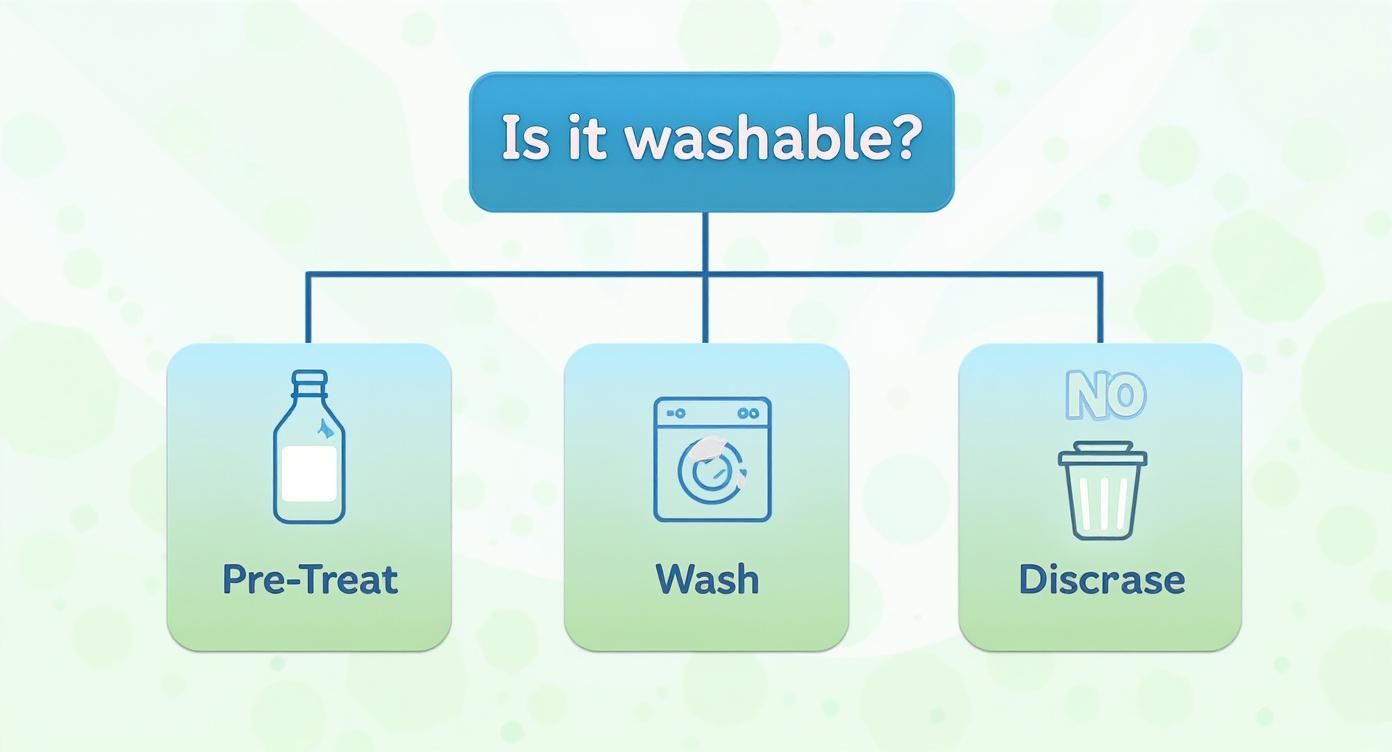
As the chart indicates, the first step is determining if the item is washable. If it is not, disposing of it may be the safest option to prevent mold from spreading.
For severe mold problems, you may need a stronger solution. Oxygen bleach is a good choice as it is safer than chlorine bleach and works on both white and most colored fabrics. While many believe chlorine bleach is the ultimate mold killer, its effectiveness can be limited. For more on this, you can read a guide on whether Does bleach kill black mold?.
Machine Wash or By Hand?
The washing method is as important as the cleaning agent. Heat is very effective at killing mold spores, so use the hottest water the fabric can safely tolerate.
For machine-washable items, use a hot water cycle of at least 140°F (60°C), after checking the care label. Adding an extra rinse cycle is also recommended to ensure all spores and cleaning agents are thoroughly removed.
Delicates like wool, silk, or certain synthetics cannot handle high heat or machine agitation. For these items, hand-washing is the only safe option. Use cool or lukewarm water, a gentle detergent, and a mild mold-killer like a diluted tea tree oil solution.
The concern over mold is growing, and market data reflects this. The global mold remediation services market was valued at USD 1.50 billion in 2024 and is projected to reach USD 2.02 billion by 2032, showing it's a significant issue for homeowners.
The Washing and Drying Playbook
With your clothes pre-treated, it's time for the main washing and drying process. Following these steps correctly is essential to ensure you eliminate all mold spores and restore your clothes.
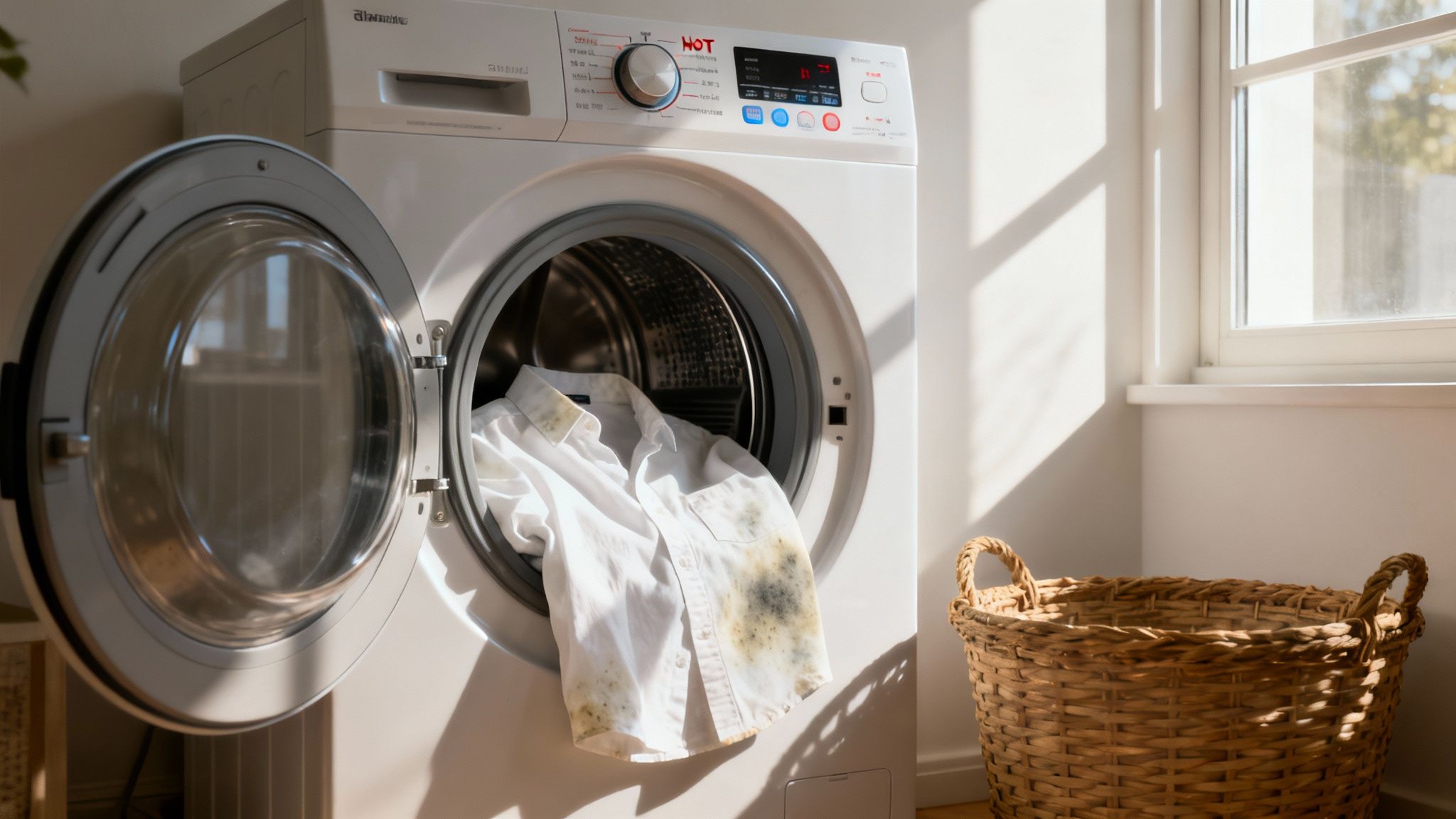
Place the pre-soaked garments into the washing machine without overloading it. Clothes need ample room to agitate and for water to circulate. Add your regular detergent along with your chosen mold killer, such as one cup of white vinegar or a half-cup of borax.
Dialing in Your Machine Settings
Your washer settings are critical for creating an environment where mold cannot survive.
First, select the hottest water temperature the fabric can safely handle. For durable materials like cotton or denim, a hot wash around 140°F (60°C) is ideal. For more delicate fabrics, warm water is the next best choice.
Next, choose the longest wash cycle available. The extended agitation helps to physically dislodge stubborn spores from the fabric.
Pro Tip: Always use the extra rinse cycle. This crucial step ensures that all dislodged mold and residual cleaning agents are completely flushed out, preventing skin irritation or regrowth.
The Critical Role of Proper Drying
How you dry your clothes is just as important as how you wash them. Proper drying is the final step in eliminating mold for good.
The best method for drying clothes after a mold treatment is to hang them in direct sunlight. The sun's UV rays act as a natural disinfectant, helping to kill any remaining spores and remove lingering musty odors.
If line-drying isn't an option, use your machine dryer on the highest heat setting the fabric can tolerate. The goal is to get the clothes 100% dry before storing them. Even slight dampness can allow mold to return.
Banishing That Lingering Musty Smell
Even after a thorough cleaning, a faint musty odor might remain. This is common, especially if the mold was severe.
If you notice a lingering scent, another wash cycle with a half-cup of baking soda added to the drum can help absorb odors. For persistent smells, our detailed guide on how to remove odors from laundry in Phoenix offers more techniques.
After your clothes are clean, be sure to clean your washing machine. Run an empty hot water cycle with a cup of vinegar or bleach to kill any spores left behind and prevent cross-contamination.
Treating Delicate Fabrics and Tough Stains
Finding mold on delicate items like a silk blouse or wool sweater requires a different approach. These materials cannot be subjected to a hot wash cycle, as it would cause shrinking or damage. Hand-washing is the safest method for these sensitive fabrics.
Fill a basin with cool or lukewarm water and add a mild, pH-neutral detergent. For a gentle mold killer, mix about two teaspoons of tea tree oil into two cups of water and add it to the basin. Submerge the garment, swish it gently, and let it soak for at least 30 minutes before rinsing thoroughly.
Tackling Lingering Stains After Washing
After killing the mold, you may be left with discolored patches. These stains are left by the fungus and can be very persistent. Removing them requires different techniques than those used to kill the mold itself.
Here are a few methods for treating these stubborn, post-mold stains:
Oxygen Bleach: This is a color-safe option that works well on many fabrics. Mix the powder with water to form a paste, apply it to the stain, and let it sit for up to an hour before rewashing.
Lemon Juice and Salt: This natural method is particularly effective on white fabrics. Create a paste, rub it into the stain, and lay the garment in the sun. The UV rays will enhance the lemon juice's natural bleaching properties.
Specialized Stain Removers: Many commercial products are designed for organic stains. Always test any new product on a hidden area, like an inner seam, to ensure it won't damage the fabric.
For more tips on stubborn spots, our Phoenix laundry guide on removing tough stains has additional detailed techniques.
The Vulnerability of Textiles
Fabric is porous and retains moisture, creating an ideal environment for mold growth. This applies to all textiles in your home, not just clothing. The growing market for professional carpet and upholstery cleaning, with a projected compound annual growth rate of 4.3% from 2024 to 2030, highlights this vulnerability. You can find more details in this detailed industry analysis.
When treating stains on delicate items, always be gentle. Scrubbing can damage fibers. Instead, blot the stain from the outside edge toward the center to prevent it from spreading.
When to Trust a Professional Laundry Service
While most minor mold issues can be handled at home, some situations are too extensive or delicate for a standard washing machine. Knowing when to call a professional can save your clothes, time, and peace of mind.
If a large amount of laundry has been left damp or an item is heavily covered in mold, household methods may not be sufficient. When mold has deeply penetrated fabric fibers, a more powerful, professional approach is needed.
When Professional Help Is a Must
Attempting to treat certain mold situations yourself can lead to further damage or incomplete removal of spores.
Consider calling experts for:
High-Value or Sentimental Items: Do not risk damaging wedding dresses, heirloom textiles, or designer clothing. Professionals have the expertise to treat delicate and irreplaceable fabrics safely.
Bulky and Thick Items: Comforters, heavy jackets, and pillows are difficult to wash and dry completely at home. Any residual moisture can lead to mold regrowth.
Persistent Odors and Stains: If a musty smell or discoloration remains after multiple washes, it's a sign that mold spores are still present in the fabric.
The GoGet My Laundry Advantage in Phoenix
For residents in the Greater Phoenix area, GoGet My Laundry offers a reliable solution for tough laundry challenges. We use commercial-grade detergents and high-temperature washes that home machines cannot replicate. Our process is designed to kill mold at its source and eliminate all traces of musty odors.
Our pickup and delivery laundry service simplifies the process for you. We serve Phoenix, Scottsdale, Mesa, and surrounding areas, collecting your items and returning them fresh and clean with a next-day turnaround. You can learn more about the process of professional laundry and what to expect from our service.
Tackling a major mold problem can be time-consuming and costly. A professional service is often a more convenient and effective option. With our residential service starting at just $1.69 per pound, including free pickup and delivery, it's an affordable way to solve the problem.
Experience the easiest way to do laundry — book your pickup now.
Answering Your Top Questions About Moldy Clothes
Even with clear instructions, questions about handling moldy clothes are common. Here are answers to some of the most frequent inquiries to help you proceed with confidence.
Will My Regular Laundry Soap Get Rid of Mold?
Standard laundry detergent is designed to lift dirt and grime, but it is not formulated to kill mold spores. Washing with only detergent might make clothes appear clean, but spores can remain and regrow in damp conditions.
To effectively remove mold, you must use a disinfecting agent. Adding white vinegar, borax, or an oxygen-based bleach to the wash cycle, combined with hot water, is necessary to kill the fungus.
What's the Real Difference Between Mold and Mildew?
Mildew is often considered a specific, early-stage type of mold. It typically appears as a flat, powdery patch of white or gray, commonly found on surfaces like shower curtains.
Other molds can be fuzzy or slimy and appear in various colors, such as green, blue, or black. While the treatment methods are similar, mildew is generally a surface-level issue, whereas more colorful, fuzzy molds may have penetrated deeper into the fabric fibers.
How Can I Stop Mold From Coming Back?
Preventing mold is all about controlling moisture. Mold requires a damp, dark environment to grow, so eliminating these conditions is the most effective preventative measure.
Follow these habits to keep mold at bay:
Ensure Clothes Are Completely Dry: Never store clothes that are even slightly damp. Make sure they are fully dry before putting them in closets or drawers.
Wash Wet Items Promptly: Do not let damp towels or sweaty gym clothes sit in a laundry basket, as this creates an ideal environment for mold.
Provide Adequate Airflow: Avoid overcrowding closets, as this can trap moisture. Using a dehumidifier in naturally humid areas like basements can also be very effective.
Are My Clothes Safe to Wear After They've Had Mold on Them?
Yes, clothes are safe to wear after they have been properly treated for mold. A thorough wash cycle with a mold-killing agent, followed by complete drying, will eliminate the spores and render the clothing safe.
The key is to ensure all spores, not just the visible spots, have been removed. A proper cleaning and drying process, preferably in direct sunlight, will ensure your clothes are clean, fresh, and pose no health risks.
For severe mold situations or when dealing with valuable fabrics, a professional service is the smartest choice. GoGet My Laundry has the commercial-grade equipment to completely eradicate mold and odors. For residential and commercial laundry service in Phoenix, contact GoGet My Laundry today or book a pickup right here.
Comments